Learning Agility
Assess First Learning Agility TestThe Best Predictor of Future Performance
Why Learning Agility Matters in Talent Selection, Development and Succession Planning
The definition of learning agility is the ability to rapidly develop new, effective behaviours based on new experiences. It is a form of learning ability and thereby indicates a person’s potential. People with a high score on Learning Agility learn more and faster from new situations than people with a low score on Learning Agility.
High scorers can benefit more from the experience, are constantly looking for new challenges, seek feedback to learn, recognise patterns in unfamiliar situations, and effectively involve others to give meaning and understanding to experiences.
Below, you will first find an overview of Learning Agility and its different facets. Following this overview, this section explains how Learning Agility is measured and what characterises people with high scores across its various aspects.
Why is Learning Agility Important?
Learning Agility measures a person’s overall ability to understand new things quickly. These things may not be relevant at the moment, but could become relevant in the future. People with high Agility can rapidly learn and understand new situations.
Organisations notice that their world is changing faster and faster. That means roles and positions are changing more quickly as well. So if we know a person is currently suitable for position A, it may well be that position A no longer exists tomorrow, or has changed significantly. In that case, it is essential to know how fast someone will be able to understand the new situation.
Learning Agility provides a way to measure that ability. It also appears to be a good predictor of High Potentials. Leadership talent in an increasingly complex environment is scarce.
That means knowing early on who your future leaders are gives organisations a competitive advantage.
Highest Correlation of any Measurement or Test
0.74

How Learning Agility is Measured
Personality Assessment Test
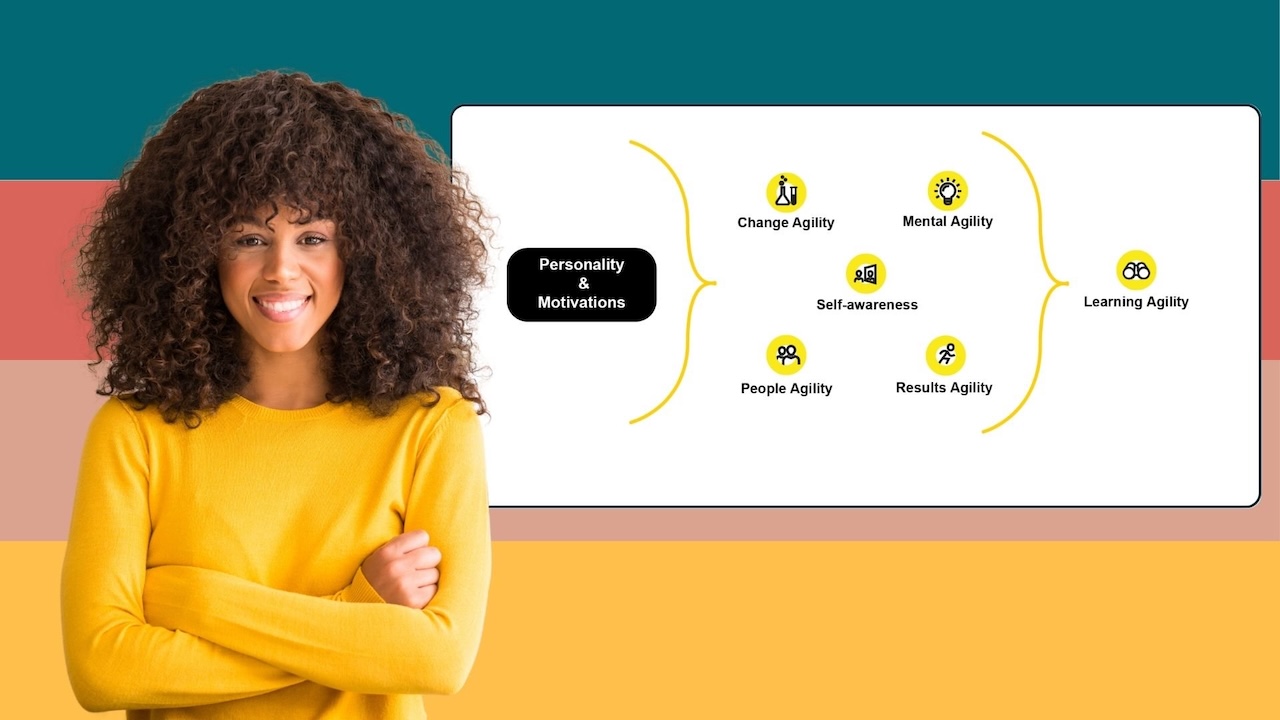
Personality assessments test measuring the Big 5 Ocean Test.
Career Drives
Motivations test using Quinn’s competing values framework
The 5 Agilities Measured
5

5 Learning Agilities
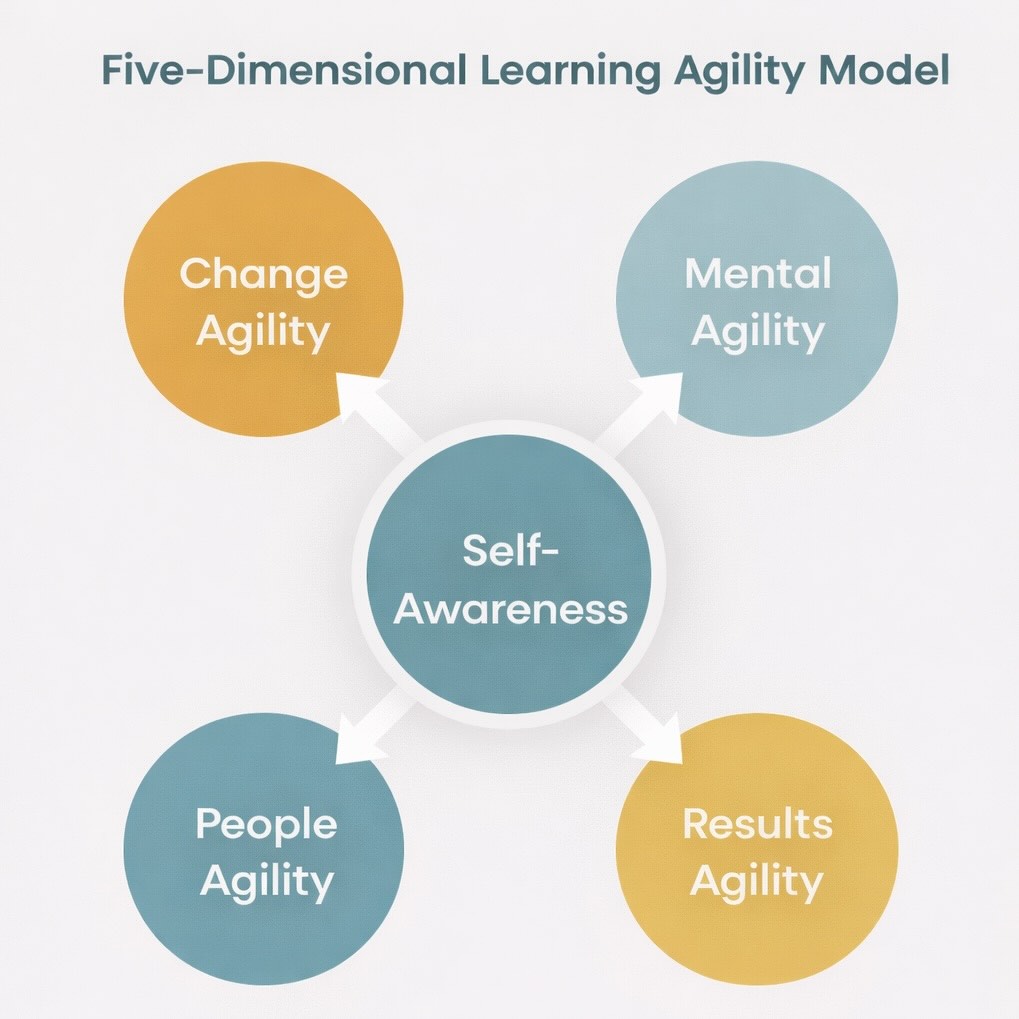
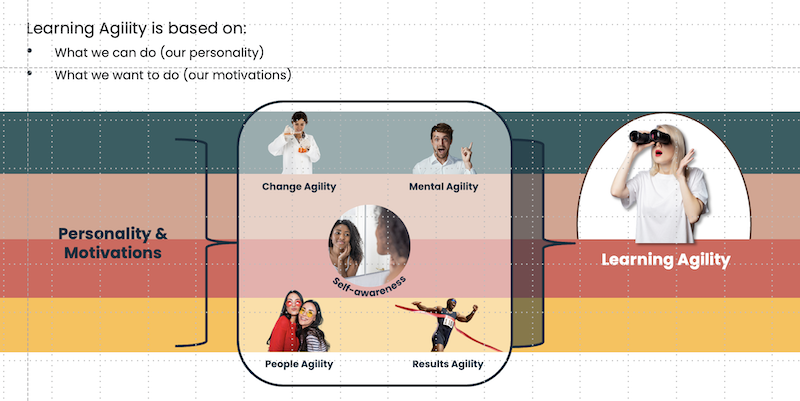
Learning Agility is determined by a number of specific personality traits and candidate motivations. It’s measured across four facets and one transcending factor: Self-awareness, which influences scores across all facets.
Change Agility
People with a high score on Change Agility are characterised by a constant curiosity, fuelled by the new and the unknown. They like to experiment, try things, and have a passion for new experiences. As a result, they experience more. They can learn more from their experiences, because they are intrinsically motivated to investigate matters and enjoy when things are not yet known to them.
Mental Agility
People with a high score on Mental Agility enjoy using new ideas to create new insights when things are complex or unclear. They like to analyse and are often able to get to the bottom of things in new ways, by thinking outside the box. They have an open mind and are open to new ideas. This helps them recognise patterns in new experiences more quickly than others. They quickly understand how the situation works and what they can learn from their experience.
People Agility
People with a high People Agility score are constructive with others and open to people with different backgrounds and opinions. They need to properly understand what others mean and take others’ views seriously. This makes it easier for them to get in touch with others, and they learn more effectively from others’ input. In addition, they can adapt more easily, for example, to people from other cultures. As a result, other people share more with them.
Results Agility
People with a high Results Agility score have a strong desire to succeed and always seek the best way to achieve results. They are often ambitious, self-confident and remain calm under pressure. Because they are better able to set goals in new and unfamiliar situations, they maintain focus and learn quickly what is or isn’t essential to make new things successful.
Self Awareness
People with a high Self-awareness score know their own strengths and weaknesses. They are often critical of their own performance and their actions. As a result, they are more keen to do things better, and their overall willingness to learn is higher. Therefore, Self-awareness plays a special role in Learning Agility: a high score increases the likelihood of the other Learning Agility elements, while a low score limits them. For this reason, you will find a separate score for your Self-awareness Factor. If it is green, then your Self-awareness increases your options.
5 Dimension Model